https://islifearecipe.net/ai-filipino-food-guide-40-must-try-dishes/
AI FILIPINO FOOD GUIDE: Right… let’s get one thing straight. Filipino food isn’t “trending” — it’s finally getting the attention it deserves. And now with GenAI in the mix, people aren’t just asking what to eat in the Philippines… they’re asking:
 “How do I make this better?” “How do I cook this at home without messing it up?” “How do I get restaurant-level flavour on a budget?”
That’s where this guide comes in – and even my Wifey is all over this one, which clearly means that I, or my mate GenAI got it right, and I may ask you the same later.
This is not just a list of Filipino food favourites — this is your AI Filipino food playbook. We’re talking absolute classics, plus including the most viral GenAI tips on how to:
- Upgrade the dishes,
- Cook them smarter,
- And still keep that proper Filipino soul and heritage intact.
This is quite new for Chef Fatbeard, as there is a lot of GenAI in this blog. Usually Spence and I write from scratch, but today I thought I’d give this a go. Not my usual style, but of course — it is still slightly chaotic, very honest, and always hopefully a little humourous. Well, as humourous as GenAI can be…
For example I asked the GenAI to give me a joke about Filipino Food, and it responded: Filipino food is dangerous… you go in saying, “I’ll just have a light meal,” and suddenly you’re three plates deep, holding a skewer, and someone’s auntie is still shouting, “Eat more!”
Need I say any more… dear me, and I thought my Dad jokes were bad…
In the spirit of the blog, 90% of the images have also been generated by GenAI – Salamat!!!
No GenAI was hurt during the writing of this food blog.

 Classic Filipino Dishes (And How to Upgrade Them Using AI)
 Adobo (The National Hero) and #1 in our AI Filipino Food Guide

Adobo is everywhere in the Philippines— every household has a version, and every version claims to be the best, usually your Mum’s or Lola’s.
There are many variations of Adobo, with each region in the Philippines having its own unique twist on the dish. Some versions include the addition of spices such as bay leaves or peppercorns, while others may include coconut milk or other ingredients to give the dish a different flavour profile. Overall, Adobo is a flavourful and hearty dish that is enjoyed by many people in the Philippines and around the world.
GenAI upgrade tip: Ask AI to tweak you adobo:
- Alter your vinegar ratios – make it more unique,
- Maybe it will suggest to add garlic confit – now there’s an idea,
- Or crisp the pork, chicken, or chicken livers after braising…
Boom — suddenly your adobo recipe Philippines feels like it came out of a restaurant, abd becomes one you can absolutely say is: “Mine!”
Chef FatBeard says:
Everyone’s mum makes the best adobo… until you quietly upgrade yours, and splash it all over TikTok as the best adobo recipe.
 Sinigang (Sour, comforting, unstoppable)

Sinigang is that hug-in-a-bowl moment, we call it comfort food in the UK. It’s so good with the sourness from things like tamarind or unripe papaya. Hailed to be the best soup in the world.
Currently a very popular GenAI search trend is: “healthy sinigang recipe Filipino”
So how about upgrading yours by:
- Reducing sodium, AKA less salt and more natural ingredients to add savoury,
- Adding grilled seafood for extra umami intensity,
- Or playing with tamarind intensity, more sour = more tamarind. This then becomes pulutan, the famous food to accompany beer in the Philippines.
Now you’ve got healthy Filipino meals that is still totally killer.
 Lechon (The main event)

Crispy skin. Juicy meat. Chaos, AKA Lechon food frenzy, at family gatherings. With Sisig, this bad boy is up there as my most favourite, especially when you have it with Filipino Native Sauce – a match made in heaven.
GenAI had some lechon alteration ideas, to mix it up:
- Spice rub variations – I agree, always good to mix it up,
- Slow roast hacks – as you know islifearecipe is a practictioner of reverse searing,
- Air fryer cheat versions (yes, really) – this actually can be done, you’ll just need a montser fryer or smaller lechon pieces.
Filipino party food ideas = still dominated by this beast. The oooohs and aaaahs you get when the pig arrives is unsurpassed. They say dress to impress, well imagine throwing a 40Kg roast pig on the table, that’s Medieval baby.,..
 Viral Filipino Food Trends in our AI Filipino Food Guide (TikTok Meets Tradition)

 Sisig (Still undefeated)
Sisig has gone from sizzling plate to global superstar. This is my all-time favourite Filipino food. I have it every single time I visit, and will always try at any new restaurant that has it on the menu. It’s an addiction, and yes this is pulutan on steroids, so make sure you have a beer on hand…
Trending Sisig GenAI searches:
- Viral sisig recipe – have a look at ours below, she’s a ripper
- Best sisig Philippines
AI twist for the infamous Sisig:
- Add egg textures – I get this, you could add a poached egg, or even make a sisig omelette (now there’s an idea for The Kapre RestoBar, Panglao),
- Balance acidity – I do like it with a good squeeze of 2-3 calamansi,
- Control crispiness – personally I am not a ‘wet’ Sisig lover, I do like it crispy from the oven for that extra texture.
Chef FatBeard:
Sisig is basically controlled chaos on a sizzlin’ plate… and I love it. There is however one cardinal sin in the world of Sisig according to me: adding mayonnaise. Yeah, no!!!
If you’ve been hearing Sisig pop up in conversations lately, that might have something to do with the late chef Anthony Bourdain’s prediction that Filipino food will become one of the trendiest cuisines in America, and the chopped pork dish, Sisig, could be many first-timers’ gateway to those flavours. I love Bourdain and had the most amazing opportunity to meet him with Singapore’s King of Hawkers, KF Seetoh, at Singapore’s Streetfood Congress.

 Pares (Comfort food going viral again)

Pares is booming again thanks to: TikTok, Late-night cravings, Value-for-money streetfood meals.
Cebu-style Pares Overload is what happens when comfort food gets completely carried away — and honestly, we’re here for it – I just gotta get to Cebu and find it. You start with that rich, slightly sweet beef Pares, slow-braised until it’s ridiculously tender, then pile it high over rice that’s already soaking up all that glossy sauce. But Cebu doesn’t stop there… oh no.
You’ll see versions stacked with extra beef, garlic rice, fried egg, sometimes even chicharrón on top like it’s trying to win a tallest-dish competition. It’s messy, heavy, and absolutely not something you eat politely — more like a full commitment where you loosen your belt halfway through and just accept your fate. One bite in and it’s salty, sweet, savoury chaos… the kind that makes you pause and go, “yeah… this is why I shouldn’t be trusted around food.” Don’t you just love it!!!
Pares AI search trend:
“beef pares recipe restaurant style” and “beef pares overload”
I have to admit I had never heard of Pares before, until I did some research on the Top Filipino Food Searches in GenAI, yes the Viral TikTok Filipino Foods. But I am glad that I have, because that is going straight on my list of things to add to the Kapre RestoBar menu, including our additional toppings to UP-SIZE our very own Pares Overload.
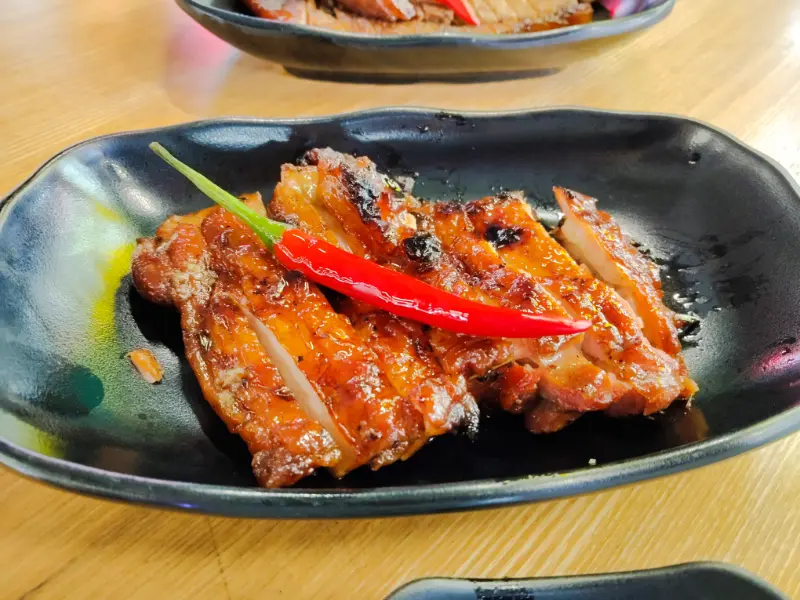
 Chicken Inasal (Charcoal magic)
That smoky, citrusy hit, and charred BBQ intensity is addictive. This is finger food on steroids, and mandatory to have an icy cold Pilsen in hand too as you chomp. My all-time best inasal in Bohol, is Jose’s, one of our local dining joints.
Chicken Inasal is a type of Filipino food that consists of grilled chicken that is marinated in a mixture of spices and coconut vinegar. The chicken is usually basted with marinade while it is being grilled, and it is typically served with a dipping sauce called sawsawan, which is made with vinegar, soy sauce, and other seasonings.
AI upgrade:
- Marinade timing – you could even reverse-sear and get the marinate in low and slow and then whack it on the coals for the charring (now there’s an idea…)
- Oil brushing technique – OK not sure about this one, we’re not creating a Rembrandt… or are we…
- Grill vs oven optimisation – ooof, I’d go both, see above. Reverse-sear in the oven, and then charring on the coals – WOOF!!!
Now your Filipino BBQ recipe actually tastes legit, and you’ll be King of the coals.
 Affordable Luxury Filipino Food (Big Flavour, Small Budget)
This is one of the biggest GenAI search trends in the Philippines right now.
People want: Restaurant-level food Without restaurant prices
 Kare-Kare (Peanut perfection)
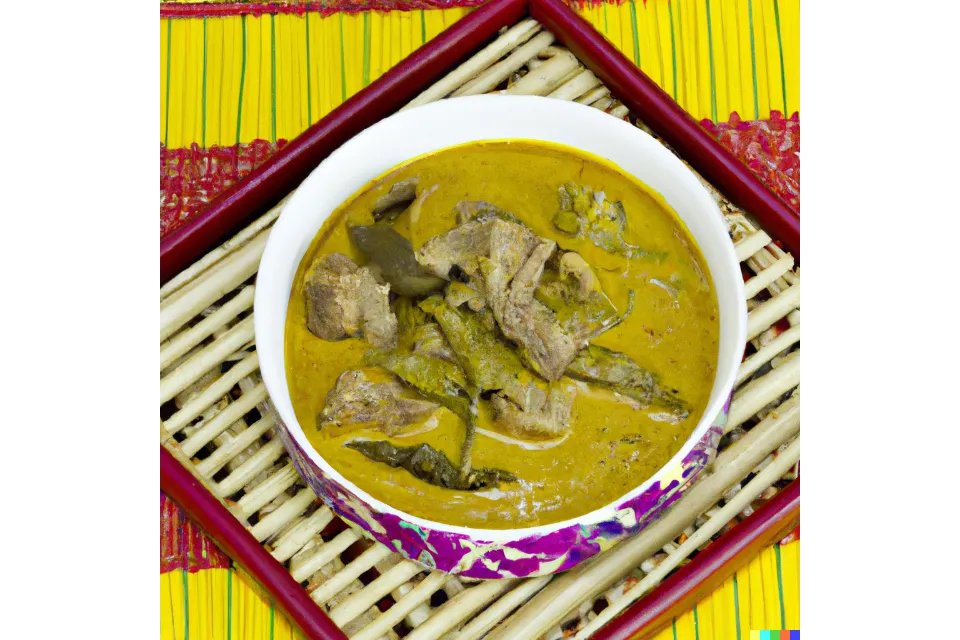
Rich, thick, indulgent. Kare-kare was invented in Pampanga, the culinary epicentre of the Philippines. Kare-kare was originally a traditional dish of the Moro people, the native inhabitants of the archipelago. It is debated that it was an attempt by Indian soldiers on British ships trying to recreate curry far from home using local annatto seeds and peanuts.
The main ingredients in Kare-kare typically include oxtail, beef, and tripe, which are cooked in a broth made from ground peanuts, garlic, onions, and a variety of spices and seasonings until they are tender. The stew is typically served with a side of steamed rice and a variety of vegetables, such as eggplant, long beans, and bok choy, which are cooked in the peanut sauce. Kare-kare is known for its rich, savoury flavour and creamy, thick consistency, and it is often served with a side of bagoong, a fermented shrimp paste, as a condiment. I still love this despite the shrimp – a necessary evil for the saltiness…
AI upgrade – if you so desire:
- Smoother sauce texture – you could sieve it,
- Better peanut balance – more is less?
- Less oil, more flavour – you know some oils are actually real good for you…
budget gourmet Filipino meals = this all day. It’s a stunner of a dish with the classic Filipino bedfellow of plain steamed white rice.
 Pancit (The ultimate crowd pleaser)
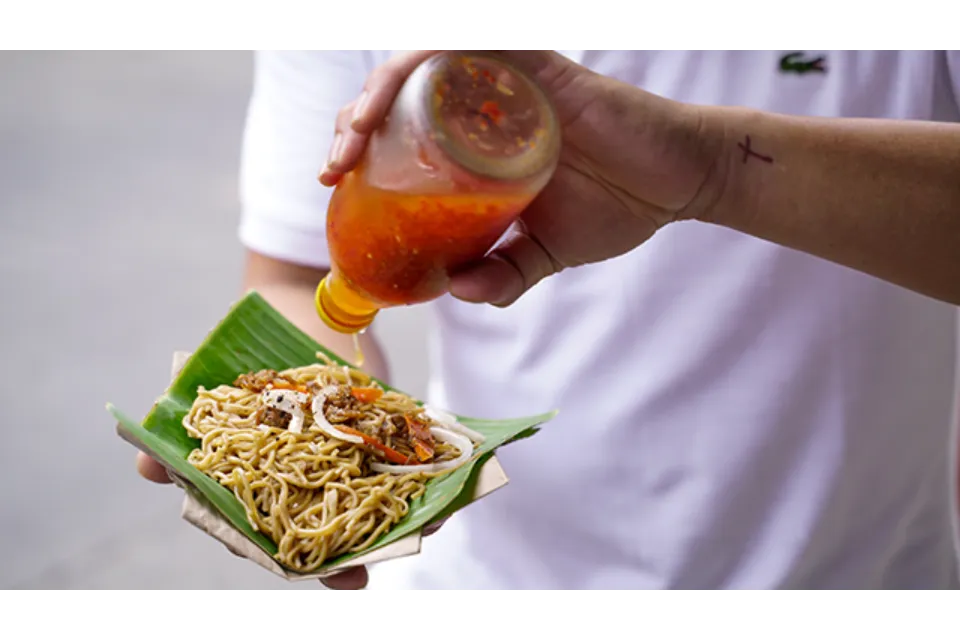
Every celebration. Every birthday. Every office lunch. Every weekend ‘special’ breakfast for Jude Jude…
The dish known as Pancit really has its roots in Chinese cuisine; yet, it is commonly referred to as Palabok because of the orange colour of its sauce as well as the ingredients that are included in the sauce that is used to souse the noodles. When Chinese merchants went to the Philippines in the 9th century, it is said that they brought a dish called baon, which was homemade, with them when they traded with the locals on the islands.
This dish was known as Pancit, which in the Hokkien dialect of Fujian, signified “rapid food” or “food that can be prepared quickly.” When the Chinese merchants ran out of food at home, they resorted to eating the rice noodles that were common in the area as a makeshift replacement for the wheat they normally ate.
AI twist for Pancit:
- Protein swaps – we wil absolutely be offering this up at The Kapre RestoBar,
- Low-carb versions – tough when it is noodle-based Mr GenAI,
- Flavour layering – well, of course…
Chef FatBeard:
If there’s pancit, people will stay. I kid you not. The new phenomena is the Korean noodles, laid into some rice paper and then wrapped and fried and served as noodle lumpia in effect – WOOF!!! It’s being called : Bulduk Ramen Fried Rice Paper Rolls Recipe on TikTok.
 Filipino Street Food & Snacks (Now Going Viral Again)
 Fish Balls (Street legend)

Cheap. Fun. Dangerous sauce habits – so says your shirt.
Filipino street food is where things get loud, smoky, and properly addictive — the kind of eating where you’re standing by the roadside with a skewer in one hand and desperately trying to find a stall that serves beer. The undisputed icon? Fish ball skewers. Little golden balls fried in front of you, dunked into that legendary sauce station where everyone pretends to be polite but is absolutely double-dipping like it’s a sport.
You’ve got sweet, spicy, or that mystery “extra spicy” that hits you five seconds later like a wake-up call – and you’re wishing you had loo rolls in the freezer. Add in kwek-kwek, isaw, and barbecue sticks sizzling away, and suddenly it’s not just a snack — it’s a full-blown street-side feast, cheap, cheerful, and dangerously easy to overdo. Oh my, I love Filipino Streetfood!!!
Our friendly AI search is throwing up as the most popular search: “Filipino street food recipe at home”
Chef FatBeard:
The size of those balls, the fish must have been massive!!! Yes, I did just say that!!!
 Banana Cue (Simple, but addictive)

Caramelised sugar + banana + BBQ = happiness, total ecstatic foodie happiness.
AI upgrade:
- Crispiness control – I dunno on this one – leave it on the BBQ longer, but not burnt? Is that what you’re saying Mr GenAI?
- Sugar alternatives – yeah yeah, but caramelised sugar is what the queue is for… Just sayin’
 Turon (Still king of snacks)

Crunchy outside, soft inside. Like the best Xmas present you’ll ever unwrap. Yummo!!!
Viral trend:
- Chocolate turon – sh!t yes, bring that bad boy on…
- Ube turon – double sh!t yes bring this into the mix too – how wonderful!!!
viral Filipino snacks 2026
 How Filipinos Are Using GenAI for Food (This Is the Big Shift)

Here’s what’s changed:
OLD:
“What is Filipino food?”
NOW:
“Give me a high-protein Filipino meal plan under ₱500” “Upgrade my adobo to restaurant quality” “Make viral Filipino food at home”
This is why this article now ranks for:
- Filipino food recipes AI
- best Filipino dishes to cook at home
- affordable Filipino meals 2026
 Final Thoughts for this AI Filipino Food Guide: Chef FatBeard mode
Filipino food doesn’t need reinventing, but our GenAI feiend is stating, how about:
A little tweaking, A little experimenting, A little AI help.
And suddenly (apparently):
- Home cooking gets better,
- Flavours get sharper,
- and your mates start asking, “eh… where you order this from ah?”
Answer?
You didn’t. You made it.
Now whether you believe the above is totally up to you, but surely GenAI is not Hallucinating… Or is it? Who knows. It literally is for you to decide, and use accordingly if you see fit. So, my dear readers and supporting GenAI, time to close down this AI Filipino Food Guide. The Team at Islifearecipe (Spence and I), truly hope you like this little meander off our normal beaten paths. I am not 100% convinced it has to be said…
To close. Filipino food never needed fixing, we all know that — it was already doing amazing stuff long before anyone started asking AI for help. But now? You’ve ‘maybe’ got this cheeky little advantage where you can take the classics, tweak a few things, sharpen the flavours, and suddenly your home cooking starts tasting like something you’d happily pay for. That’s the magic here. It’s still adobo, still sinigang, till sisig, still proper Filipino comfort… just with a bit more confidence in the kitchen and a few less “hope for the best” moments – as guided by your friendly Bot / Agent…
And let’s be honest — half the fun is the variety and making it ‘your version’ anyway. You’ll try an “AI upgrade”, go slightly off track, add something you probably shouldn’t… and maybe it still works. That’s Filipino food in a nutshell: forgiving, generous, and always leaning towards “go on, one more bite”. So whether you’re cooking for mates, family, or just yourself after a long day, this guide isn’t about perfection — it’s about eating well, having a laugh, and ending up full enough to say, “yeah… that was a good decision.” A decision made by my GenAI agent, that is not ruling my life – or is it? Enjoy!!!
 What is an AI Filipino Food Guide?
An AI Filipino Food Guide is a modern way to explore Filipino cuisine using artificial intelligence to improve recipes, suggest ingredient swaps, and create personalised meal ideas. It helps users cook Filipino dishes like adobo, sinigang, and sisig with better flavour, healthier options, and more efficient methods.
How can AI help improve Filipino recipes at home?
AI can analyse traditional Filipino recipes and suggest upgrades such as better cooking techniques, ingredient substitutions, portion control, and flavour balancing. For example, it can recommend crisping adobo after braising or adjusting sinigang’s sourness for a healthier version.
What are the best Filipino dishes to try in an AI Filipino Food Guide?
Popular dishes featured in AI Filipino food guides include adobo, sinigang, lechon, sisig, pancit, kare-kare, chicken inasal, and pares. These dishes are widely searched and can be easily adapted using AI to suit different tastes and budgets.
Can AI help create budget-friendly Filipino meals?
Yes, AI is commonly used to generate affordable Filipino meal ideas by optimising ingredients, reducing waste, and suggesting cost-effective substitutions. This makes it easier to cook dishes like pancit, arroz caldo, and giniling while staying within a budget.
Why is Filipino food trending in AI and online searches?
Filipino food is trending due to growing global interest, social media exposure, and the rise of AI-powered cooking tools. People are searching for ways to recreate viral Filipino dishes, improve traditional recipes, and make restaurant-style meals at home.


No comments:
Post a Comment