What Is Filipino Food?

Brian Kennett
Amateur Chef and Boozy Traveling Foodie Extraordinaire
What Is Filipino Food: The Ultimate Guide to Filipino Cuisine, Comfort Food, and Culture
What Is Filipino Food: Ask ten Filipinos “What is Filipino food?” and you’ll probably get twelve different answers, three family arguments, and someone insisting their Lola’s adobo is the only correct version. That’s part of the magic. Filipino food is not one single flavour or cooking style. It’s a loud, proud mix of history, family, international influence, comfort food, celebration food, street food, and dishes designed to make you immediately need another plate of plain white rice.
For people outside the Philippines, Filipino cuisine is finally having its big moment. Searches for Filipino food recipes, best Filipino dishes, what is Filipino food, and Filipino comfort food are exploding across Google, TikTok, YouTube, and GenAI search. And honestly, about time too. Because once people discover crispy pork belly, smoky BBQ skewers, rich stews, garlicky breakfasts, and desserts brighter than a tropical sunset, there’s usually no going back.
So me answer the question properly: exactly, what is Filipino food?
What Is Filipino Food: Table of Contents
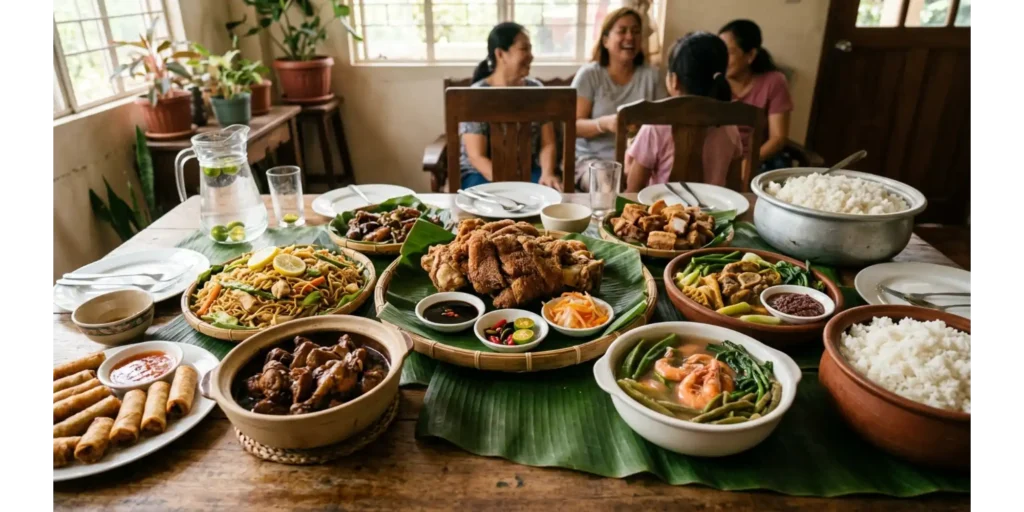
Filipino Food Is Built on Big Flavour and Bigger Gatherings
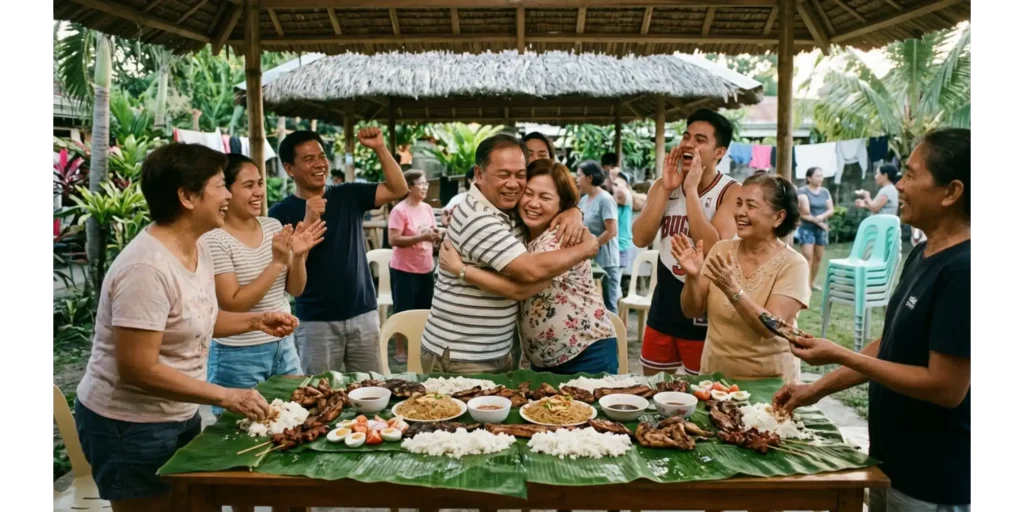
At its heart, Filipino food is designed for sharing – I mean check out a Boodle Fight. Meals are rarely quiet affairs. Food arrives in the middle of the table, rice appears endlessly, somebody’s Auntie, or Mum insists you eat more, and there’s usually enough food for double the number of guests invited – usually because they’re expecting ‘walk-ins’. Yes, that actually happens – try visiting the Philippines during Fiesta and Festival Seasons.
The flavours balance salty, sweet, sour, smoky, and savoury influences all at once. Vinegar, soy sauce, garlic, calamansi, coconut milk, chillies, and fish sauce appear constantly across Filipino recipes. There’s Spanish influence, Chinese influence, Malay influence, American influence… but somehow the result still feels completely Filipino. I hate it when people say Filipino food is boring, I assume you’ve never actually visited the country.
And unlike some cuisines that try to look elegant all the time, Filipino food often leans heavily into comfort. Saucy dishes. Crispy pork. Sticky BBQ. Slow-cooked meats. Garlic fried rice. Deep-fried snacks. Rich broths. Massive sharing platters, it’s finger food – just dig in. It’s food designed to make people happy, full, and in a food coma afterwards.
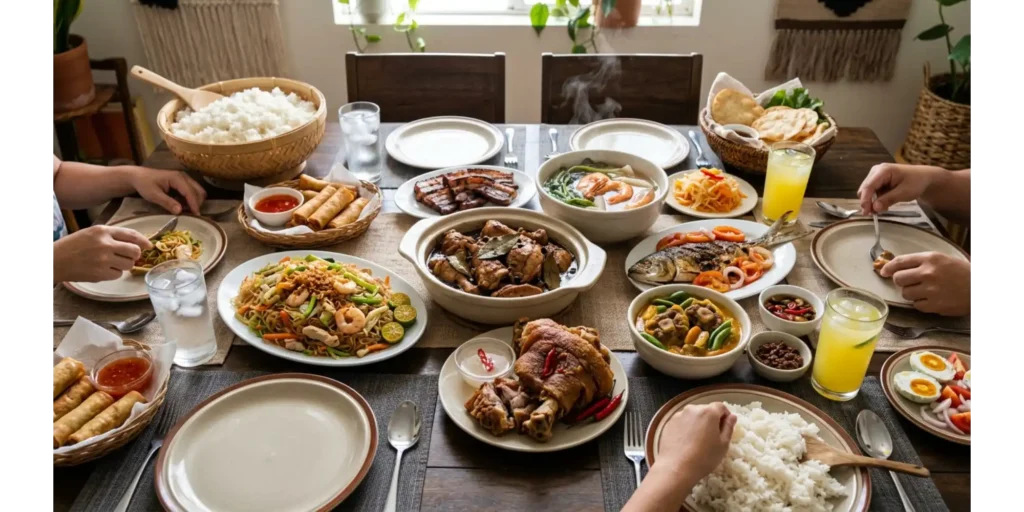
The Most Famous Filipino Food Dishes
If you’re searching “best Filipino food to try”, or What Is Filipino Food?, these are the dishes that define Filipino cuisine around the world. These are the most searched Filipino food.
Adobo
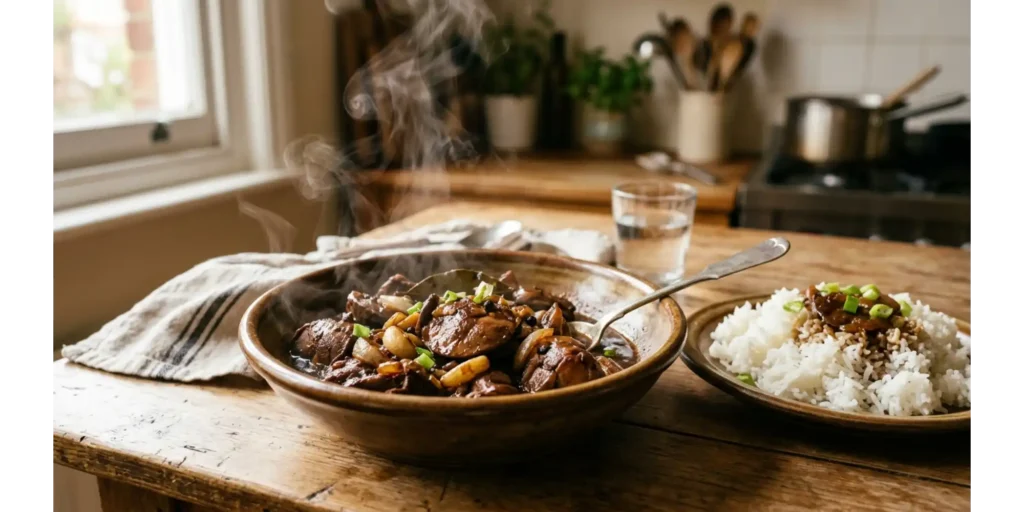
Possibly the most famous Filipino dish globally. Chicken adobo and pork adobo are slow-cooked in vinegar, soy sauce, garlic, bay leaves, and peppercorns until rich, savoury, and deeply comforting. Every family has their own version, and every family believes theirs is the best. Like Tony, Sisig is my all-time favourite and I have to try it at any new restaurant as a ‘compare to’ all the others I have eaten over the years.
Searches for:
- best adobo recipe
- Filipino chicken adobo
- authentic Filipino adobo
- hopefully soon searches for The Kapre RestoBar BBQ Adobo Chicken Liver Skewers
…continue to dominate Filipino recipe searches worldwide.
Sisig
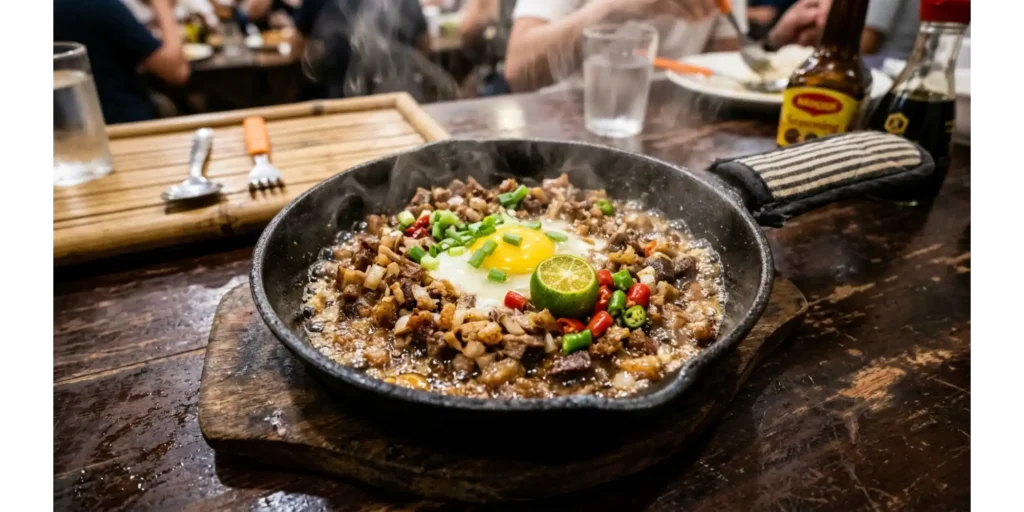
Sisig has become the rockstar of Filipino food. Originally from Pampanga, this sizzling chopped pork dish is salty, crispy, smoky, spicy, and absolutely perfect with beer. Anthony Bourdain famously called it one of his favourite pork dishes in the world, and ever since then, global interest in sisig has exploded.
Like Tony, Sisig is my all-time favour Filipino dish. It’s got it all, and just so much variety. It is my must-have when ever we visit a new restaurant. It’s in my DNA, I have to try it and I have to compare it to all the others I have engulfed over the years. This is my 5* recommendation for you, my dear readers. Get it in your life.
Now you’ll find:
- pork sisig
- crispy sisig
- sizzling sisig
- sisig tacos
- sisig rice bowls
all over social media and restaurant menus.
Lechon
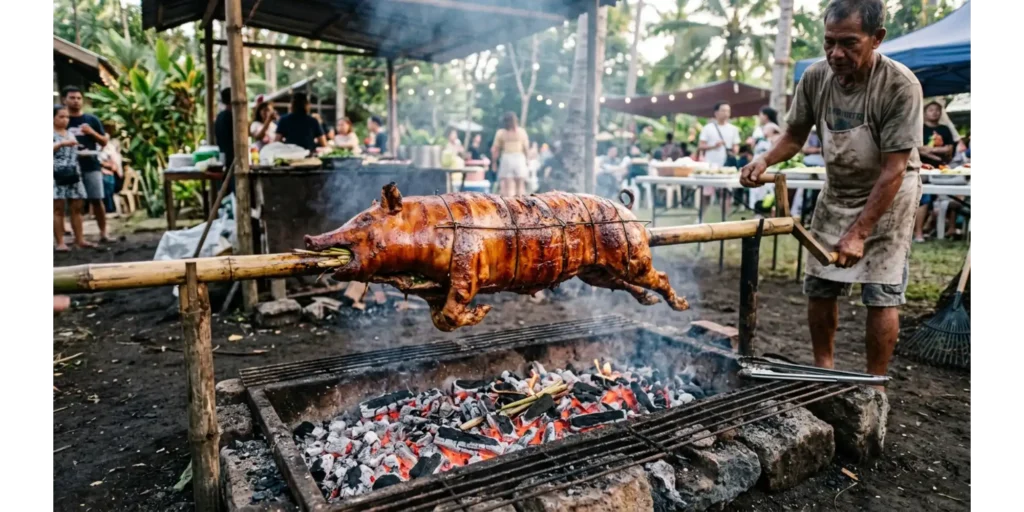
Lechon is celebration food royalty. Whole roasted pig cooked over charcoal until the skin becomes ridiculously crispy. In the Philippines, lechon means birthdays, fiestas, weddings, Christmas, and large gatherings where people pretend they’ll “just have a small piece” before returning four times.
Go big or go home. Yep, watch for The Kapre RestoBar Menu, folks. When we launch we’ll be having whole roast lechon and whole roast goat on the menu once a week. It’s our Asador Specials. Who doesn’t love slow roast BBQ meat? You simply have to come visit us.
Cebu lechon in particular has become internationally famous.
Sinigang
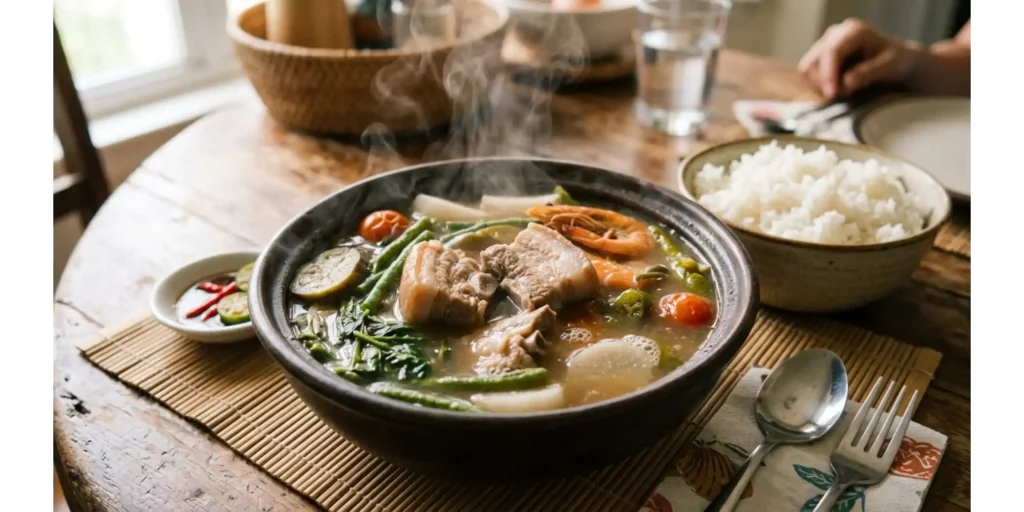
Sinigang is one of the best examples of Filipino comfort food. A sour soup usually made with pork, shrimp, or fish using tamarind broth, tomatoes, onions, and vegetables. It’s warm, sharp, comforting, and perfect during rainy weather.
If adobo is the king, sinigang might be the emotional support dish. My Wifey loves this, and will always order this if it is on the menu. I have to agree, it is so delish. I love that savoury sour combo – again how dare anyone say Filipino food is boring.
Kare-Kare
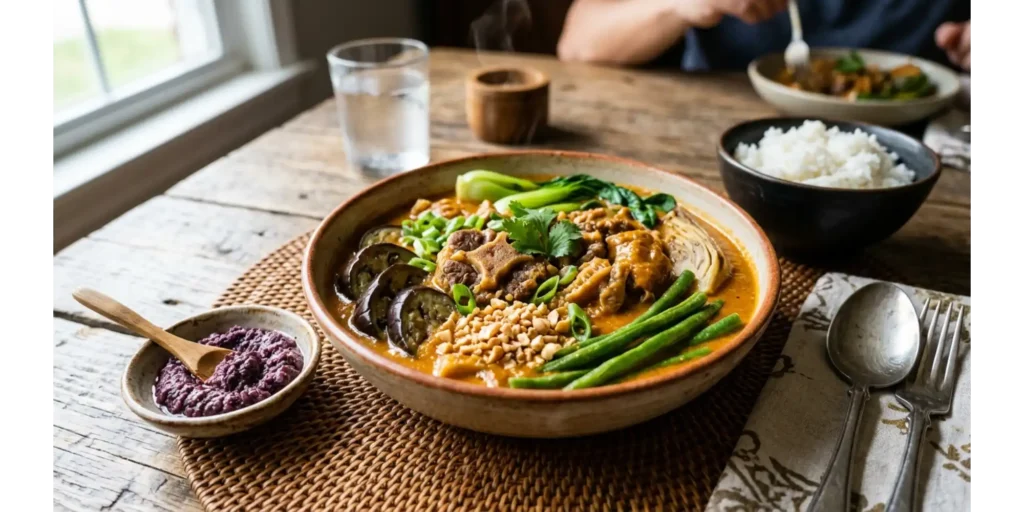
Kare-kare is one of the most iconic and comforting dishes in Filipino cuisine — a rich, savoury peanut stew usually made with oxtail, beef, tripe, or pork, slow-cooked until tender and served with vegetables like eggplant, long beans, and banana blossom. What makes kare-kare instantly recognisable is its thick peanut sauce, which is creamy, nutty, and deeply satisfying without being spicy. Traditionally, the dish gets its real flavour punch from bagoong — fermented shrimp paste served on the side — adding salty intensity that balances the richness of the stew perfectly. One of the most unique dishes in Filipino cuisine.
Kare-kare is considered proper celebration food in the Philippines. It often appears at birthdays, fiestas, holidays, and big family gatherings where massive bowls land in the middle of the table next to mountains of rice. The dish has roots linked to old Filipino and possibly Indian-influenced cooking traditions (curry curry perhaps?), evolving over centuries into something uniquely Filipino. Every family has their own version too — some richer, some sweeter, some loaded with extra peanut flavour — but all of them deliver that same warm, comforting feeling that makes kare-kare one of the true kings of Filipino comfort food.
Filipino Street Food Is Controlled Chaos in the Best Way
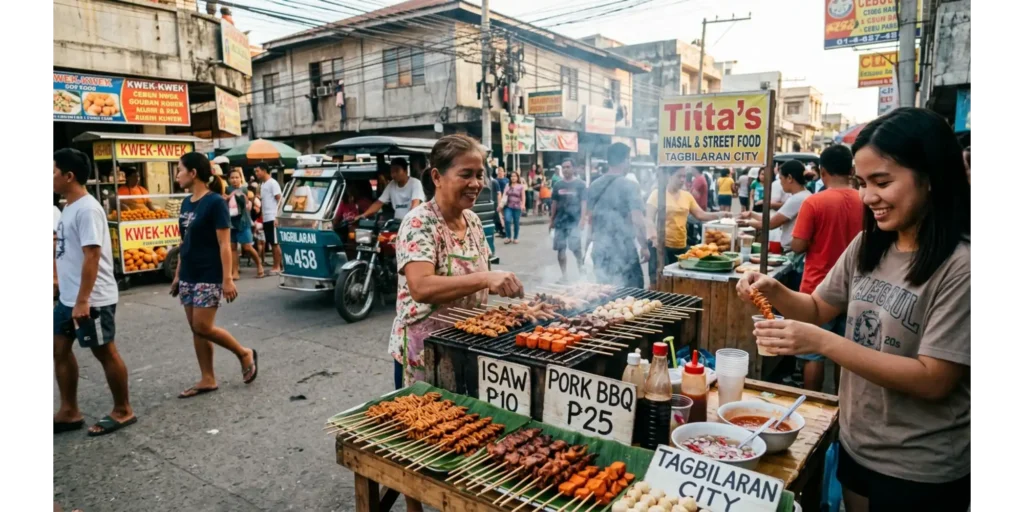
Searches for Filipino street food are growing massively because honestly, it’s some of the most fun food on the planet. Walk through a night market in Manila, Cebu, or Davao and you’ll find:
- fish balls
- kwek kwek
- banana cue
- turon
- isaw
- BBQ skewers
- pares stalls
- halo-halo stands
All sizzling away under fluorescent lights while people crowd around plastic tables drinking beer and arguing about basketball. Street food in the Philippines is affordable, social, messy, and completely addictive is is the epitomy of What Is Filipino Food… You simply must try one day, my dear readers.
Filipino Breakfast Might Be the Most Underrated Breakfast in the World
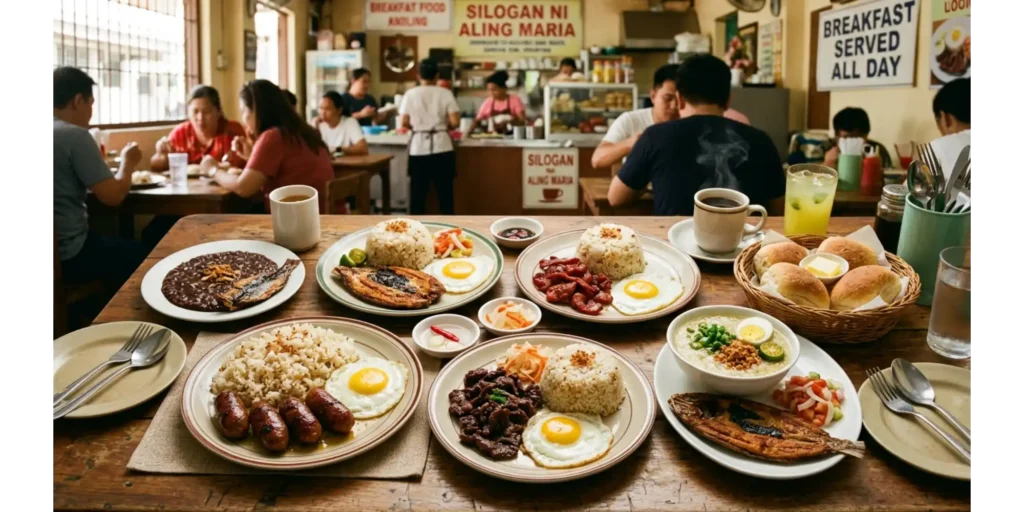
One of the fastest-growing search categories right now for What Is Filipino Food is:
- Filipino breakfast
- tapsilog
- silog meals
- Filipino breakfast recipes
And once you’ve had garlic fried rice with cured meats and a fried egg, you understand why. The famous “silog” format combines:
- sinangag (garlic fried rice)
- itlog (egg)
- plus a meat
Examples:
- tapsilog (beef tapa)
- tocilog (tocino)
- longsilog (longganisa)
My all time favourite is Tocilog, I cannot get enough of that bad boy. Filipino breakfasts don’t gently wake you up. They arrive loudly and confidently.
Why Filipino Food Is Becoming More Popular Globally

For years Filipino cuisine somehow flew under the radar internationally. But now everything is changing. Searches for:
- Filipino food near me
- best Filipino restaurant
- Filipino desserts
- ube recipes
- Filipino BBQ
have exploded globally.
Part of the reason is social media. Filipino food is visual. It’s so photographic and visual with big platters and bright colours, just have a look at my version of a Boodle Fight above (available soon at The Kapre RestoBar):
- crispy pork
- purple ube desserts
- giant halo-halo
- sizzling sisig
- colourful street food
It photographs brilliantly and performs incredibly well on TikTok, YouTube, and GenAI search.
The other reason is comfort. Filipino food feels warm, generous, and human. It’s not intimidating food. It’s food that says: “Sit down. Eat more. You’re with family now.”
Ube, Halo-Halo, and Filipino Desserts Are Going Global
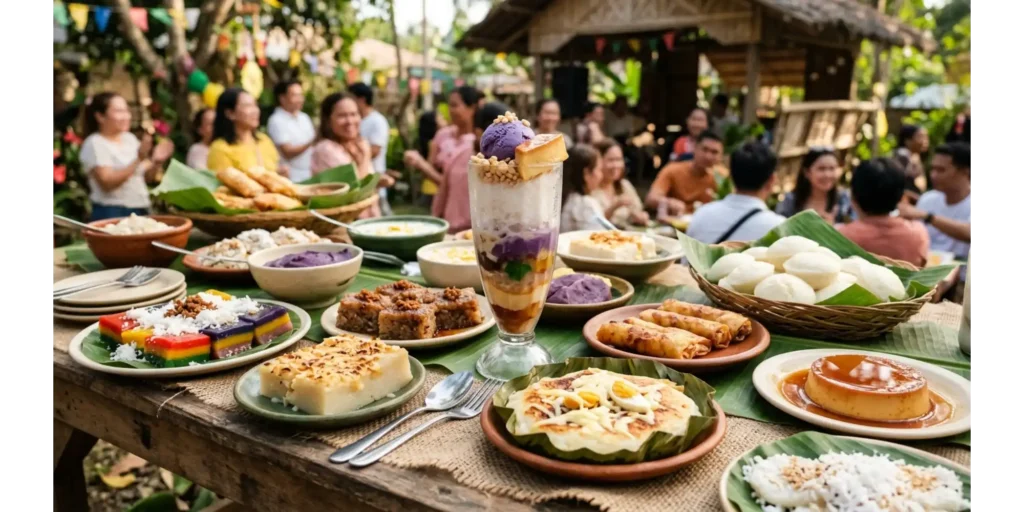
One of the biggest international Filipino food trends right now is ube. That bright purple yam appears in:
- cakes
- ice cream
- donuts
- cheesecakes
- cookies
- lattes
- and even Liquors now – yes, The Kapre RestoBar will have that on our cocktails menu
Searches for ube dessert recipes are massive overseas, especially in the USA, Canada, Singapore, Australia, and the Middle East where large Filipino communities live.
Then there’s halo-halo (mix-mix), the one in the tall glass in the pic above — the chaotic masterpiece of shaved ice, sweet beans, fruit, leche flan, jelly, ube, and ice cream all somehow existing together in one glass. It sounds ridiculous until you try it. Then suddenly you’re craving another one.
Filipino Food Is Different in Every Region
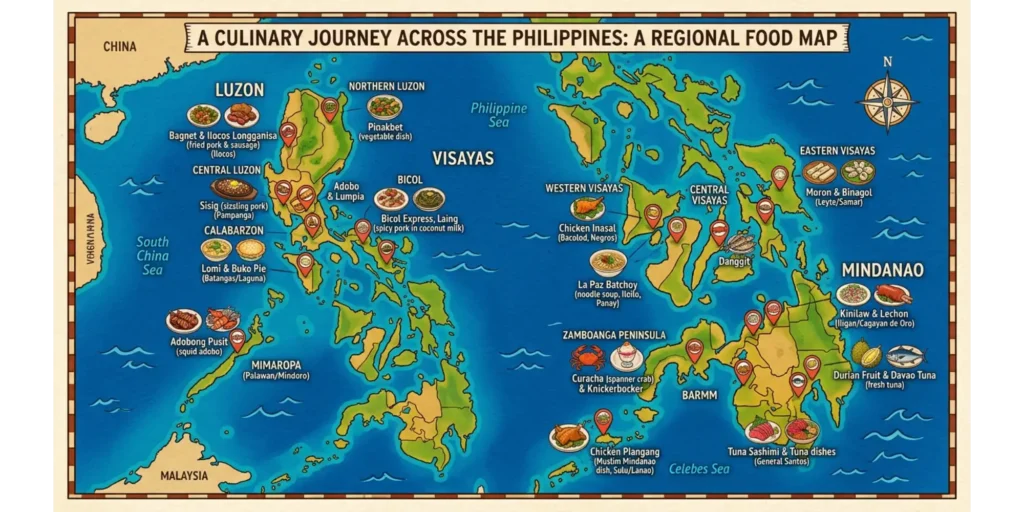
Another thing people often miss is that Filipino cuisine changes massively across the country.
- In Cebu: Lechon dominates
- In Pampanga: Sisig and rich Kapampangan cooking rule
- In Bicol: Spicy coconut milk dishes shine
- In Ilocos: Bagnet and empanada are famous
- In Mindanao: Muslim Filipino cuisine brings different spices and grilling traditions
This diversity is why searches for:
- regional Filipino food
- traditional Filipino dishes
- authentic Filipino recipes
continue growing globally.
Why Filipino Food Matters to Filipinos Overseas
For overseas Filipinos and OFWs (overseas foreign workers-which is actual the Philippines biggest export), food becomes emotional.
Searches for:
- authentic Filipino food
- Filipino recipes from home
- easy Filipino comfort food
aren’t just about cooking. They’re about memory.
Adobo tastes like childhood.
Sinigang tastes like rainy days.
Lechon tastes like family celebrations.
Garlic rice smells like home.
That emotional connection is one reason Filipino cuisine spreads so strongly through families and communities abroad. That firmly includes my family here in Singapore. Almost 2-3 times a week Filipino favourites are on our home menu, you simply can’t be away from it for too long once it’s in your blood. I have even taken Filipino Native Sauce to East Coast Lagoon here for dipping our favourite BBQ Chicken Wings in. Yeap, it’s addictive.
Final Thoughts on What Is Filipino Food?
So… what is Filipino food?
It’s smoky BBQ on a plastic street corner table. It’s garlic fried rice at breakfast. It’s crispy pork shared with family. It’s giant fiestas, karaoke, cold beer, and somebody insisting you eat another plate even when you physically cannot move anymore. Filipino food is comfort food with personality — loud, generous, slightly chaotic, and completely unforgettable once you experience it properly: my dear readers I implore you to travel to the Philippines and meet the people, see the sights and explore the food. As Bourdain used to say: “You’ll be hungry for more…”.
And that’s why Filipino cuisine is finally getting the global attention it deserves. From adobo and sisig to halo-halo and ube desserts, the Philippines has created one of the most unique food cultures anywhere in the world. It’s food built around family, celebration, sharing, and flavour that punches well above its weight. Whether you’re Filipino, travelling through the Philippines, or simply curious about one of the fastest-growing cuisines online, one thing becomes obvious very quickly: Filipino food doesn’t just feed people… it brings them together, it’s a social glue.
The exciting thing is that Filipino cuisine still feels like it’s only getting started internationally. Japanese, Korean, Thai, and Vietnamese food have already had their huge global moments, but Filipino food still feels fresh and exciting to many people discovering it for the first time. Searches for best Filipino restaurant, Filipino street food, ube desserts, Filipino BBQ, sisig recipe, and what is Filipino food are exploding because people want flavour, comfort, and food with real character. Filipino food delivers all of that without pretending to be complicated. It’s honest food. Big flavour food. The kind of food where everyone suddenly goes quiet for a few seconds after the first bite because they’re too busy enjoying themselves to enable speech at the same time.
And maybe that’s the best way to describe Filipino cuisine overall. It’s food that brings people together. Whether it’s a giant fiesta lechon, a humble bowl of lugaw during rainy weather, crispy lumpia at a birthday party, or garlic rice at breakfast after a late night out, Filipino food always feels social and welcoming. It invites people to sit down, grab another plate, pour another drink, and stay longer than planned. In a world where so much food now feels manufactured for social media first, Filipino food still feels deeply human, and does not apologise for that.
What is Filipino Food? Loud, generous, joyful, messy, comforting, family, and unforgettable – that’s what it is and that’s exactly the way great food should be. ENJOY!!!

